
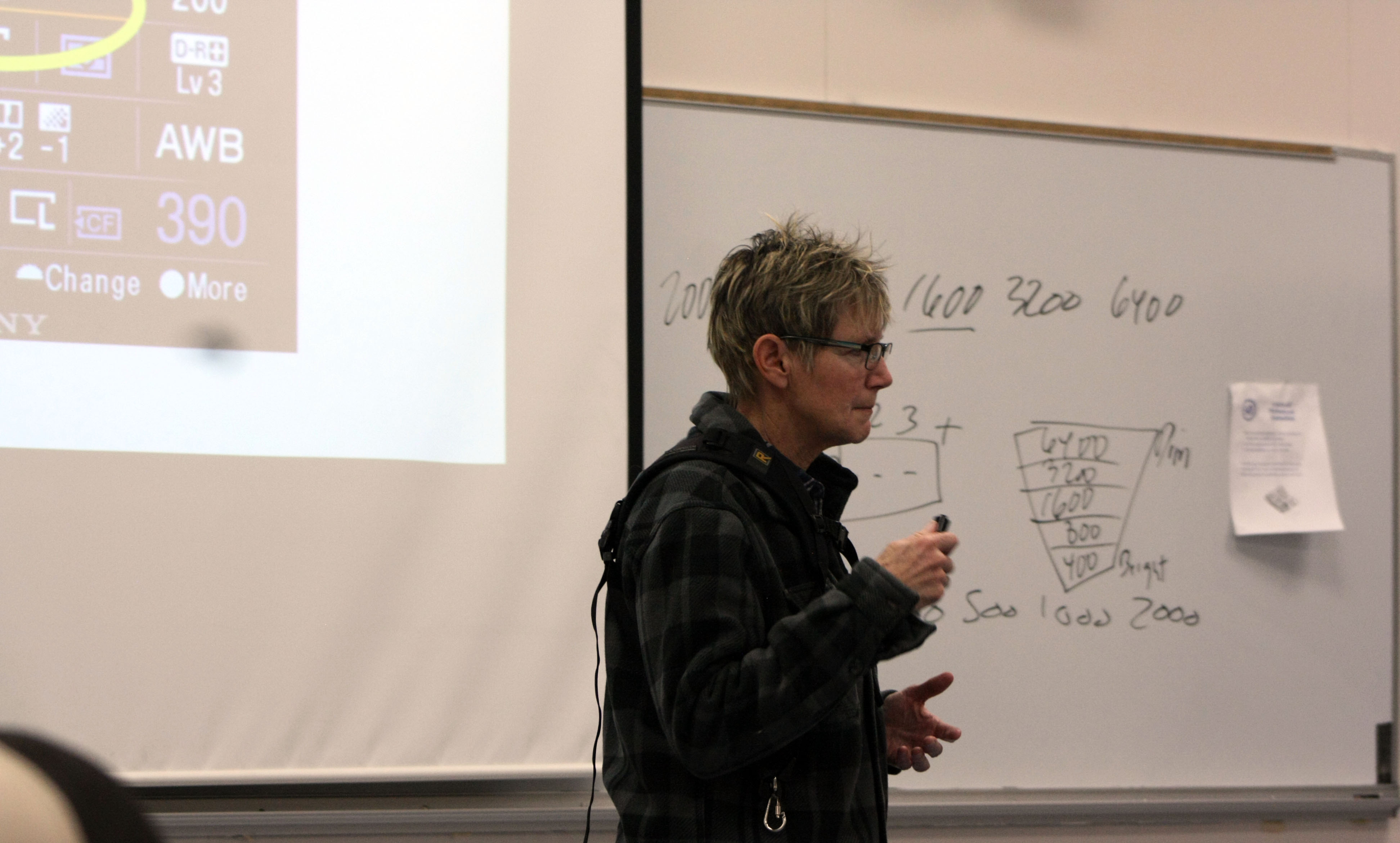
 As my teacher Ms King says, “Photojournalism is a visual language”. I understand and agree that in digital age, photojournalism is a visual language written in ‘light’ font. Just like we have different types of fonts in every written language. Visual language is written by the stream of light entering the camera. Understanding the controls and operating process of cameras enhance our skills of photography and enables us to write stories in marvelous calligraphies, in this case; desired photos with desired results.
It is elementary to understand how a camera works to make a properly exposed digital image. Light is fundamental; if we control light, we control the output photo quality. The technical components of camera control the input light stream and effect elements of exposure to shoot photos in various conditions, situations and also with different perspectives. Most principal function of all the camera components is to control (how much) quality and for (how long) quantity of light entering the camera. This can be achieved primarily by:
- ISO: Acronym for International Organization for Standardizations, is the first step. It controls the sensitivity of camera in available light. Changing ISO settings changes the light sensitivity of the camera sensor. Set ISO settings according to available light on the shooting locations. For shooting in indoor locations with very low light set ISO to 6400 (max). while, as low as 100 to shoot under bright sun. Normally, default ISO settings are set on 400. But beware, after 1600 level of ISO the photos start experiencing noise effect in outputs.
- Aperture: controls the quality of light entering camera. It controls the Depth of Field. Known as f-stop. Larger aperture (ex-f/2.8) will shoot photos with Shallow Depth of Field and smaller Aperture setting (ex-/22) will shoot photos with Greatest Depth of Field.
- Shutter: The quantity of light entering camera is controlled by shutter speed, hence necessary to set according to available light. Shutter speed settings are controlled to shoot action photos. Slower shutter speed (ex-1”) will allow longer duration of light producing blurred action photo. While, faster shutter speed (ex-1/4000) will allow shorter chunks of light inside producing stopped action photos. Controlled shutter speed also shoots panned action photos
These three settings are essential and should be set appropriately and before taking photos beginning with ISO. To monitor ideal settings for desired photo shoot Camera Meter becomes very handy and useful. It helps us to determine the correct settings of aperture and shutter in the intensity of available light.
Some other essential elements of exposure include White Balancing which tunes the camera settings inline to the temperature of light. Multiple options can be used; Tungsten which is warm as home light bulb will have different exposure as from Daylight, Shade or Cloudy settings. Exposure compensation helps maintain the fine balance between Overexposure and Underexposure. The photographs tend to lose details if they are overexposed.
To begin shooting photos, first set your ISO, Aperture and Shutter speed. Then tune the white balance according to available light. The neutralize the camera by pointing the lens on an absorbing background like grey colored surface and softly pressing the click button halfway. Adjust exposure compensation as per camera meter and start shooting. Keep clicking until you get desired results.
#cameraoperations, #photography, #exposure, #camerabasics #UTa4 #photography #camera @toledophotog @intro2pj #photosettings
 SK Photojournalism